
Becker’s State Lobbying Update: Week 1: January 12th-16th, 2026
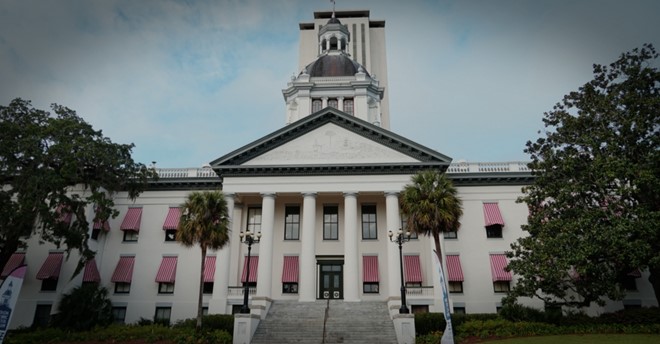
Opening Day
The 2026 Legislative Session commenced on Tuesday, January 13, with legislators gathering in Tallahassee to pass legislation and a balanced state budget. In his opening remarks, President Albritton outlined his commitment to Rural Florida by again pursuing his priority entitled Rural Renaissance. The bill passed the Senate in 2025 but did not make it in the House. The proposal (SB 250) includes a series of efforts aimed at bolstering health care, education, transportation, and economic development in rural areas. In the House, Speaker Perez briefly touched on an array of topics ranging from taxes to the economy to affordability and insurance to the costs of “public benefits.” His main efforts leading up to the start of the session have been putting forth a number of proposals to lower property taxes,
Governor DeSantis delivered his State of the State address in a joint session where he emphasized Florida’s tremendous efforts to ensure freedom and safety for all. The Governor mainly covered many of the accomplishments from the years of his administration and leadership. Looking forward to the 2026 Session, he mentioned and expressed hope for lawmakers to provide property tax relief for homesteaded properties, but did not expressly endorse a plan or put forth his own. While mentioning his hope for tax reform during the Session, the Governor and Senate President have already suggested that the idea of lowering property taxes be handled during a special session of the Legislature.
Agriculture
SB 250 – Rural Communities by Senator Simon
HB 723 – Rural Counties by Representative Abbott
SB 250 by Senator Simon expands support for rural communities by creating new offices and programs, revising funding distributions, and enhancing infrastructure, economic, and educational initiatives. SB 250 establishes the Office of Rural Prosperity within the Department of Commerce, directs it to coordinate assistance and resources for rural communities, and requires it to create regional community liaison centers. The bill creates the Renaissance Grants Program to provide block grants for growth-impeded rural counties and the Public Infrastructure Smart Technology Grant Program to promote technology solutions in rural infrastructure projects. The bill revises multiple state revenue distributions, including sales tax distributions and certain formula allocations, to benefit fiscally constrained and rural counties through new or increased funding sources. The bill adjusts the definition of fiscally constrained counties; updates match requirements for rural projects, and allows waivers or reductions of certain financial or regulatory obligations for rural areas. The bill amends various transportation programs- such as the Small County Road Assistance Program, the Small County Outreach Program, and the newly created Florida Arterial Road Modernization Program- to prioritize capacity, safety, and economic connectivity in rural communities. The bill directs new appropriations and modifies existing programs to expand housing initiatives, workforce development, broadband infrastructure, and healthcare support for rural and economically distressed areas. SB 250 passed the Senate Floor with a vote of 39-0.
SB 290 – Department of Agriculture and Consumer Services by Senator Truenow
HB 607 – Industries and Professional Activities by Representative Yarkosky
SB 290 by Senator Truenow changes laws in the Department of Agriculture and Consumer Services. SB 290 prohibits a county from authorizing a local policy to restrict the use of gasoline-powered farm/landscape equipment. The bill establishes density requirements for developers who seek to build in small counties and provides some exemptions. The bill requires the Acquisition and Restoration Council to determine whether any lands surpluses by a local government are suitable for bona fide agricultural purposes, and prohibits local governments from transferring future development rights. The bill requires the Department of Environmental Protection to determine whether any state-owned conservation lands are suitable for agricultural purposes. The bill removes the Babcock Ranch Advisory Group. The bill adds penalties for contractors who fail to compensate their subcontractors/suppliers promptly. The bill adds criminal penalties for receiving/providing unauthorized assistance on a commercial driver’s license exam. The bill repeals statutes requiring Florida’s participation in the Southern States Energy Compact. The bill prohibits land application of biosolids besides Class AA biosolids, and removes the requirement that rules adopted by the department, regarding biosolids, be ratified by the Legislature. The bill increases insurance requirements and maximum fine amounts for fumigation providers. The bill adds obstruction to the prohibited acts involving permitting entry or inspection. The bill repeals the Healthy Food Financing Initiative. Prohibits the commercial solicitation on properties that have “no solicitation” signs and provides penalties for violations. The bill modifies eligibility requirements for the Agriculture and Aquaculture Producers Emergency Recovery Loan Program. The bill establishes the Florida Native Seed Research and Marketing Program. The bill creates the Food Animal Veterinary Medicine Loan Repayment Program. The bill adds the Welaka Training Center as a site that the Florida Forest Service may operate to train fire and forest resource managers. The bill allows the Florida Forest Service to pay the commercial driver’s license renewal costs for employees. The bill establishes the Farmers Feeding Florida Program. The bill prohibits the department from renewing a certificate of registration for an aquaculture facility that is not in compliance. The bill revises various regulations of fairs. The bill adds concealed weapons permit or concealed weapon permit holder to the list of words a person is prohibited from wearing/displaying with the intention to mislead, and provides criminal penalties for violation. The bill removes the word “perishable” from the agricultural food products and adds that the term “agricultural food product” includes any agricultural practices used in the production of such products. SB 290 passed the committee by a vote of 17-3 and now heads to the Senate Rules Committee.
Construction
SB 208 – Land Use and Development Regulations by Senator McClain
HB 399 – Land Use and Development Regulations by Representative Borrero
SB 208 by Senator McClain requires local governments to base and disclose development application fees on actual costs and adopt objective standards for assessing residential compatibility. The bill mandates that local governments must tie application fees for development permits or orders to direct and reasonable indirect costs and post them on their fee schedules, prohibiting fees based on project costs or valuations. The bill requires inclusion of specific factors for evaluating residential compatibility, such as density, building size, and operational impacts, in comprehensive plans and land development regulations. The bill obligates local government staff to detail each area of incompatibility and consider mitigation measures before recommending denial of an application. The bill prohibits denial of an application on compatibility grounds if feasible mitigation measures are proposed by the applicant, and disallows vague references to ‘community character’ or ‘neighborhood feel’ as the sole basis for denial. The bill allows approvals to include conditions to minimize compatibility issues while preserving a local government’s ability to enforce plan consistency. SB 208 passed the committee by a vote of 10-0 and now heads to the Senate Rules Committee.
SB 354 – Blue Ribbon Projects by Senator McClain
HB 299 – Blue Ribbon Projects by Representative Melo
SB 354 by Senator McClain creates a new statutory framework for large-scale, mixed-use development projects that preserve significant land for conservation and streamline the local approval process. The bill requires the projects consist of at least 10,000 contiguous acres, with at least 60 percent of the total acreage designated as reserve area and up to 40 percent designated as walkable, mixed-use development area. The bill permits a residential density of up to 12 units per acre and up to an 85 percent impervious surface ratio for nonresidential development, while mandating at least 20 percent of residential units be affordable. The bill vests project development rights and impact mitigation for at least 50 years, with a 25- year extension if half of the development area is built out within 50 years. The bill requires a blue ribbon plan outlining infrastructure, water and environmental protections, transportation needs, and guidelines to ensure long-term conservation and sustainable land use. The bill provides for administrative approval of qualifying projects by local governments with limited review, along with an expedited process and possible automatic approval if review deadlines are missed. The bill authorizes appeals of project denials to the Department of Commerce and allows substantially affected persons to seek administrative hearings to challenge project approvals. SB 354 passed the committee by a vote of 7-1 and now heads to the Appropriations Committee on Transportation, Tourism, and Economic Development.
HB 405 – Commercial Construction Projects by Representative Griffitts Jr.
SB 526 – Commercial Construction Projects by Senator Grall
HB 405 by Representative Griffitts Jr. makes provisions in public construction contracts which waive, release, deny, restrict, or extinguish certain rights of the contractor, void & enforceable. The bill requires the Building Commission, in consultation with DBPR, to create a uniform commercial building permit application & standardized trade-specific forms be accepted statewide; prohibits such application from being modified. The bill authorizes local enforcement agencies to require supplemental, trade-specific forms or additional documentation or plans for certain projects; provides requirements for such supplemental forms. The bill requires local enforcement agencies to allow certain reviews & make available to local enforcement agencies & applicants such applications by a specified date. The bill requires local enforcement agencies to reduce permit fees for commercial construction projects by certain percentages. The bill prohibits local enforcement agencies from collecting any fees for commercial construction projects. HB 405 passed the committee with a vote of 11-0 and now heads to the House Commerce Committee.
SB 840 – Land Use Regulations for Local Governments Affected by Natural Disasters by Senator DiCeglie
HB 1465 – Restrictions on Local Government Regulations After a Hurricane by Representative Andrade
SB 840 by Senator DiCeglie puts restrictions on local government land use regulations following hurricanes. The bill narrows the geographic area subject to the restrictions for 1 year after hurricanes make landfall. The bill revises the restrictions to prohibit enforcement of moratoriums that delay repairs; requirements for repairs or reconstruction to comply with the comprehensive plan or land development regulation amendments adopted after landfall; or the enforcement of procedural changes made after landfall that increase timeframes for final action related to development permits or orders. The bill clarifies and expands exceptions to the restrictions on impacted local governments. The bill shortens the timeline during which specified counties may not enact new moratoriums or land use restrictions and moves the expiration date for these provisions from 2028 to 2026. SB 840 passed the committee by a vote of 8-0 and now heads to the Judiciary committee.
Education
SB 318 – Educational Scholarship Programs by Senator Gaetz
SB 318 by Senator Gaetz expands and streamlines scholarship programs by consolidating funding, revising eligibility criteria, and strengthening oversight requirements. SB 318 creates new stabilization funds to ensure scholarship funding throughout the year. The bill rename the Hope Scholarship Program to the Hope Program. The bill revises the Florida Tax Credit Scholarship Program to streamline definitions and expand scholarship uses. The bill clarifies testing expectations for private schools by requiring standardized assessments. The bill directs the Department of Education to create recommendations for eventual in-house administration of scholarship programs. SB 318 passed the Senate by a vote of 38-0.
SB 320 – Administrative Efficiency in Public Schools by Senator Simon
HB 963 – Administrative Efficiency in Public Schools by Representative Smith
SB 320 by Senator Simon streamlines district responsibilities and removes certain mandates to increase administrative efficiency in public schools. SB 320 exempts district school boards from specified rulemaking requirements and expands the Department of Education’s duty to inform superintendents about requesting declaratory statements. The bill deletes the requirement for an internal auditor in large districts and removes the obligation to include the school financial report in the student handbook. The bill extends from 3-5 years the allowable timeframe for purchasing instructional materials, subject to the State Board of Education requiring earlier purchases for certain subject areas. The bill revises sections governing Voluntary Prekindergarten to reduce or remove early learning coalition verification duties for public schools and adjust attendance record requirements. The bill adjusts statewide, standardized assessment schedules by requiring earlier notification, removing the uniform calendar requirement, and revising how districts publish testing dates. The bill prohibits using a single measure of student learning growth as the sole factor in recruiting personnel and requires specific timelines for releasing Title I funds in school improvement plans. The bill authorizes multiyear instructional contracts in addition to annual contracts after a specified date, sets conditions for awarding and rescinding such contracts, and clarifies that an unsatisfactory evaluation reverts a teacher to an annual contract. The bill permits school districts or regional education associations to issue temporary certificates under certain conditions, lengthens the validity period of certain professional certificates to 10 years based on performance, and updates continuing education requirements. The bill modifies capital outlay and facility planning by reducing certain documentation requirements, repealing mandatory life-cycle cost comparisons, and authorizing the department to collect less data when plans are updated. SB 320 passed the committee with a vote of 20-0 and is placed on the calendar for a 2nd reading.
HB 561 – Educator Certifications by Representative Gerwig
HB 561 by Representative Gerwig expands eligibility for a temporary educator certificate, revises reinstatement requirements for expired professional certificates, and requires the Florida Center for Teaching Excellence to collaborate with the David C. Anchin Center to provide no-cost professional learning opportunities. HB 561 removes barriers to reinstatement of expired professional educator certificates, providing educators with a streamlined process for returning to the classroom. The bill corrects a reference relating to the Florida Center for Teaching Excellence and requires the center to offer free professional learning to educators seeking to renew or reinstate their certificate. The bill prohibits using credits or in-service points already counted toward the expired certificate to meet the requirements for reinstatement. The bill mandates collaboration between the Florida Center for Teaching Excellence and the David C. Anchin Center, including submission of a professional learning system for state approval and providing no-cost professional development options for certified educators seeking to renew or reinstate their certificates. HB 561 passed the committee by a vote of 15-0 and now heads to the House PreK-12 Budget Subcommittee.
Government Operations
SB 572 – Ethics for Public Employees by Senator Harrell
HB 603 – Ethics for Public Employees by Representative Lopez
SB 572 by Senator Harrell expands the definition of a public employee’s “relative” to include legally recognized foster parents and foster children. The bill includes foster parents and foster children in the statutory definition of “relative.” The bill reenacts the section governing gifts to district school board members to reflect the updated definition of “relative.” SB 572 passed the committee by a vote of 8-0 and now heads to the Governmental Oversight and Accountability Committee.
Healthcare
HB 121 – Nursing Education Programs by Representative Overdorf
SB 254 – Nursing Education Programs by Senator Harrell
HB 121 by Representative Overdorf increases accountability for underperforming nursing programs. The bill increases oversight and accountability for pre-licensure nursing education programs by tightening approval and probation standards, shortening accreditation timelines, and expanding enforcement authority for the Board of Nursing. Requires free remediation or tuition reimbursement when programs fail to adequately prepare students for licensure exams. The bill revises application requirements for nursing education program approval. The bill authorizes the Board of Nursing to revoke the program’s approval. The bill revises requirements for the annual reports program directors of approved programs are required to submit to the board. The bill provides for revocation of the program’s approval & discipline of its program director; revises remediation procedures and removes the provision authorizing the board to extend the program’s probationary status. The bill authorizes agents of DOH to conduct onsite evaluations & inspections, as well as to collect evidence as part of such evaluations & inspections. The bill removes the provision authorizing approved nursing education programs to request an extension to meet the board’s accreditation requirements. The committee passed HB 121 with a vote of 107-1 and now heads to the Senate.
HB 237 – Use of Professional Nursing Titles by Representative Salzman
HB 237 by Representative Salzman authorizes nurses licensed to practice in Florida and hold doctoral degrees to use the titles “Doctor of Nursing Practice,” “Doctor of Philosophy,” and the abbreviations of “D.N.P.,” “Ph.D,” in a manner consistent with the degree possessed. The bill requires nurses to specify their profession when using the title of “doctor” in a clinical setting. HB 237 passed the committee with a vote of 18-0 and now heads to the House Health & Human Services Committee.
HB 301 – Advanced Practice Registered Nurse Autonomous Practice by Representatives Shoaf
SB 138 – Advanced Practice Registered Nurse Autonomous Practice by Senator Truenow
HB 301 by Representative Shoaf authorizes psychiatric nurses registered for autonomous practice of psychiatric mental health services, as determined by the Board of Nursing, without an established physician protocol. HB 301 passed the committee with a vote of 14-4 and now heads to the House Health & Human Services Committee.
HB 327 – Uterine Fibroid Research Database by Representatives Dunkley & Valdes
SB 196 – Uterine Fibroid Research Database by Sharief
HB 327 by Representatives Dunkley & Valdes requires healthcare providers to submit identified information to the Department of Health (DOH) for inclusion in the Uterine Fibroid Research Database. The bill also adds uterine fibroids to the list of infectious or noninfectious diseases of public health significance, which requires health care providers to submit identified uterine fibroid data DOH for epidemiological research purposes. HB 327 passed the Committee with a vote of 18-0 and now heads to the Health Care Budget Subcommittee.
HB 355 – Health Care Patient Protection by Representative Oliver
SB 68 – Health Care Patient Protection by Senator Harrell
HB 355 by Representative Oliver strengthens the ability of Florida’s emergency departments to treat and stabilize children in life-threatening emergencies. The bill establishes basic safety requirements for any hospital with an emergency department. The bill develops and implements policies and procedures relating to pediatric patient care and conducts training on these policies and procedures. The bill designates a pediatric emergency care coordinator. The bill conducts the national pediatric readiness assessment. The bill requires AHCA to publish the hospital scores online. The bill requires AHCA to adopt rules for minimum baseline standards for pediatric care in hospital emergency departments. The committee passed HB 355 with a vote of 109-0 and now heads to the Senate.
Housing
SB 48 – Housing by Senator Gaetz
HB 313 – Housing by Representative Nix, Jr.
SB 48 by Senator Gaetz requires local governments to adopt accessory dwelling unit ordinances, allow landlords to accept reusable tenant screening reports, and expand affordable housing incentives and studies. SB 48 authorizes a landlord to accept a reusable tenant screening report when determining whether to lease a residential property to a prospective tenant. The bill requires each county and municipality to enact an ordinance by December 1, 2026, to allow accessory dwelling units in all single-family residential areas. The bill authorizes local governments to regulate the permitting, construction, and use of accessory dwelling units, with specified exceptions. The bill allows certain land donated to a local government for affordable housing to be used to provide affordable housing to military families. The bill directs the Office of Program Policy Analysis and Government Accountability to evaluate the efficacy of using mezzanine finance, or second-position short-term debt. The bill will stimulate the construction of owner-occupied affordable housing, as well as evaluate the potential for tiny homes to meet affordable housing needs. SB 48 passed the committee with a vote of 13-0 and now heads to the Senate Rules Committee.
Insurance
SB 1028 – Citizens Property Insurance Corporation by Senator Gruters
HB 943 – Citizens Property Insurance Corporation by Representative Redondo
SB 1028 by Senator Gruters expands Citizens Property Insurance Corporation’s clearinghouse to include commercial lines, revises premiums and eligibility where surplus lines or authorized insurers offer comparable coverage, and clarifies agent appointment and policyholder options. The bill requires Citizens to charge the higher of Citizens’ own rate or the surplus lines insurer’s rate for commercial risks receiving surplus lines offers. The bill establishes a new commercial line clearinghouse to divert eligible commercial applicants or policyholders to authorized or surplus lines insurers. The bill permits approved surplus lines insurers to participate in the commercial lines clearinghouse but not in personal lines, with participation remaining optional. The bill revises eligibility requirements so that certain applicants and policyholders must choose coverage outside Citizens if a qualifying, comparably priced offer exists. The bill allows applicants and policyholders receiving offers from surplus lines insurers to keep Citizens coverage, but at a premium at least matching the surplus lines offer if it is within 20 percent of Citizens’ premium. The bill clarifies that independent and exclusive agents retain ownership of policy expirations and may enter limited or standard agreements with authorized insurers or surplus lines agents. SB 1028 passed the committee by a vote of 10-0 and now heads to the Appropriations Committee on Agriculture, Environment, and General Government.
Justice
HB 145 – Suits Against the Government by Representative McFarland
SB 1366 – Claims Against the Government by Senator Brodeur
HB 145 by Representative McFarland provides an update to the sovereign entity financial liability caps. HB 145 states that retaining a liability shield for the government modernizes the way citizens can seek redress when harmed by their own government. HB 145 proposes to raise the caps on sovereign immunity to $500,000 per person and 1 million dollars per incident, with an automatic increase in 5 years to $600,000 and 1.2 million. The bill aligns the statute of limitations so victims have the same amount of time to bring a claim against the government entity as they would against a private one. The bill gives government entities the option to settle above the sovereign immunity caps if they elect to. The bill prevents insurance companies from withholding payment until a claim bill has been passed by the legislature. HB 145 passed the committee with a vote of 104-7 and now heads to the Senate.
HB 289 – Civil Liability for the Wrongful Death of an Unborn Child by Representative Greco
SB 164 – Civil Liability for the Wrongful Death of an Unborn Child by Senator Grall
HB 289 by Representative Greco amends Florida’s Wrongful Death Act to include the parents of an unborn child in the definition of survivors. The bill defines the term “unborn child.” The bill prohibits right of action against the mother for wrongful death of an unborn child or against a health care provider for lawful medical care provided in certain circumstances. The bill authorizes parents of an unborn child to recover certain damages. The bill prohibits recovery of certain damages if the decedent is an unborn child. The committee passed HB 289 with a vote of 76-34, and now it heads to the Senate.
HB 6003 – Recovery of Damages for Medical Negligence Resulting in Death by Representatives Trabulsy & Lopez
SB 1700 – Recovery of Damages for Medical Negligence Resulting in Death by Senator Grall
HB 6003 by Representative Trabulsy & Lopez aims to repeal Florida Statute 768.21 that takes away the ability for family members to recover non-economic damages if their loved one is over the age of 25, unmarried, and with no dependence. The bill ensures families can seek justice when medical negligence leads to the death of a loved one. HB 6003 passed the committee with a vote of 88-17 and now heads to the Senate.
Regulations
HB 607 – Industries and Professional Activities by Representative Yarkosky
SB 290 – Department of Agriculture and Consumer Services by Senator Truenow
HB 607 by Representative Yarkosky renames, removes, & redesignates specified boards, commissions, and councils established within DBPR; changes office locations of certain divisions. HB 607 specifies that certain license application requirements apply only to certain professions; provides licensing authority to the department rather than licensing boards. HB 607 removes post-licensure education requirements for brokers, broker associates, and sales associates; removes continuing education requirements for licensure renewal as broker, broker associate, and sales associate; and removes continuing education requirements for licensure renewal due to inactive status. The bill revises provisions about the board to transfer powers, duties, and responsibilities of the board to DBPR, granting certain authority to the department, rather than the Florida Real Estate Appraisal Board. The bill requires the department to adopt rules; revises violations for which retail tobacco product dealers are penalized, and revises retail nicotine product dealer administrative penalties. The bill requires FDLE to accept and process certain fingerprints; specifies procedures for submitting and processing fingerprinting; and requires the department to conduct certain background checks. HB 607 passed the committee with a vote of 10-2 and now heads to the House Commerce Committee.
Taxes
HJR 203 – Phased Out Elimination of Non-school Property Tax for Homesteads by Representative Miller
HJR 203 by Representative Miller proposes an amendment to the State Constitution to increase the exemption for homestead property from all ad valorem taxation other than school district levies annually for 10 years by a certain amount. HJR 203 increases the second homestead exemption for ad valorem taxes that currently applies to the assessed value of homestead properties between $50,000 and $75,000, adjusted annually for inflation, by adding $100,000 per year to this exemption for ten years. In the beginning, in 2037, the entire assessed value of homestead properties would be exempt from all ad valorem taxes other than school taxes. The bill proposes a new Section 7 of Article VIII of the Florida Constitution to prohibit local governments from reducing funding for services provided by law enforcement, firefighters, and first responders below a specified base year. HJR 203 passed the committee with a vote of 16-6 and now heads to the House Ways & Means Committee.
HJR 209 – Property Insurance Relief Homestead Exemption Non-school Property Tax by Representative Busatta
HJR 209 by Representative Busatta proposes an amendment to Article VII, Section 6 of the Florida Constitution to provide an alternative second homestead exemption that is $200,000 more than the existing $25,000 second homestead exemption for homestead property from all ad
valorem taxation other than school district levies for homestead properties that have property insurance. The bill prohibits local governments from reducing total funding for first responders and provides an effective date.